Deel economics: crossing borders for payroll and hiring
Deel is a private company that helps businesses hire and pay people in other countries. Instead of a company setting up a legal entity in every country it wants to hire from, it can use Deel to handle contracts, payroll, and compliance.
How Deel fits into hiring
When a company wants to hire a worker or contractor in another country, it faces local rules, taxes, and paperwork. Deel steps in as a middle layer. It either hires the worker on behalf of the company or sets up a compliant contract and payment flow.
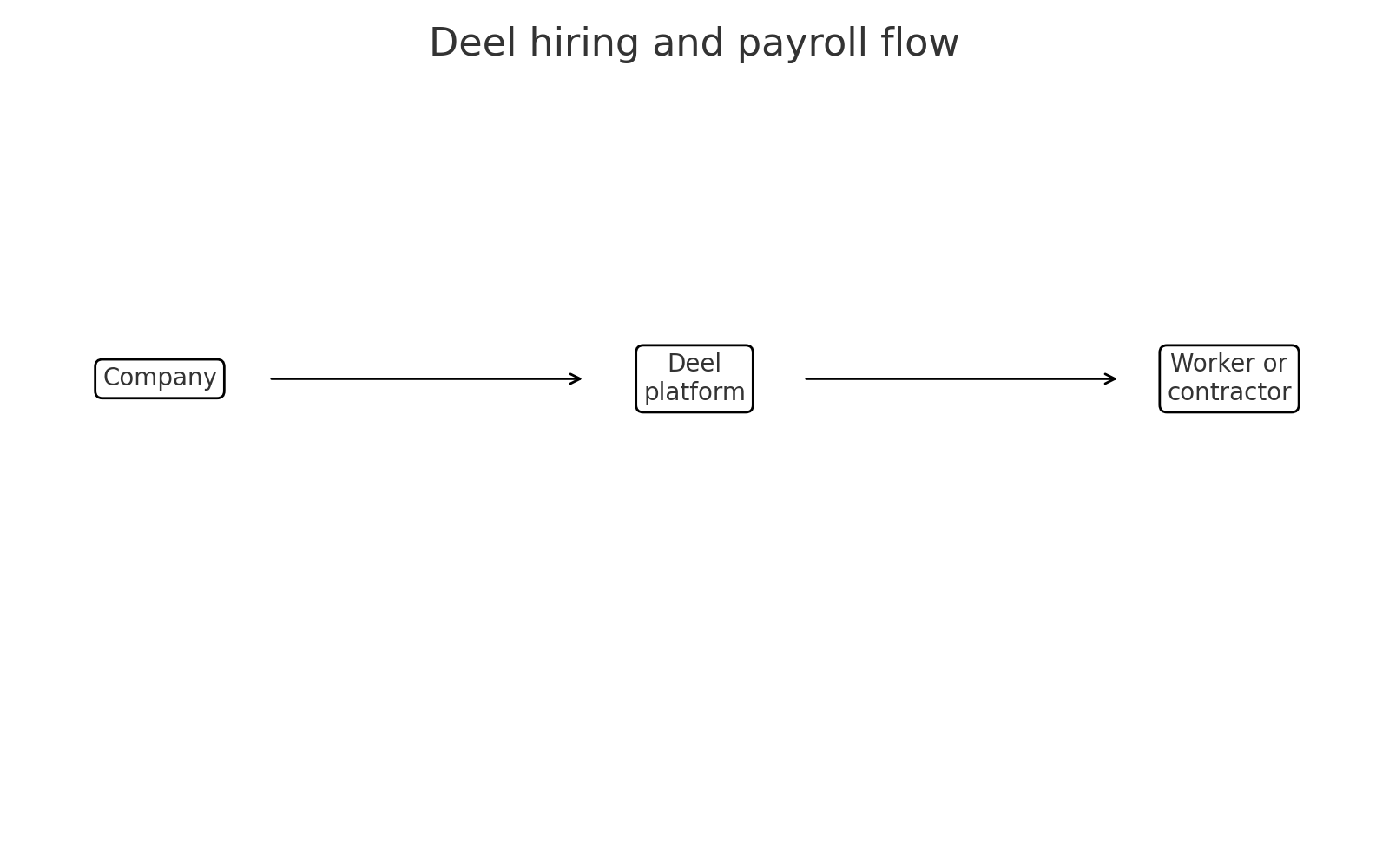 Deel hiring flow
The company deals with Deel. Deel deals with the worker or contractor and with local systems. This saves the company from setting up full local operations just to hire one or two people in a new place.
How Deel makes money
Deel makes money in a few ways:
- charging a fee per worker or contractor on the platform
- charging a fee based on the payroll volume it processes
- selling extra services like benefits, visas, and compliance help
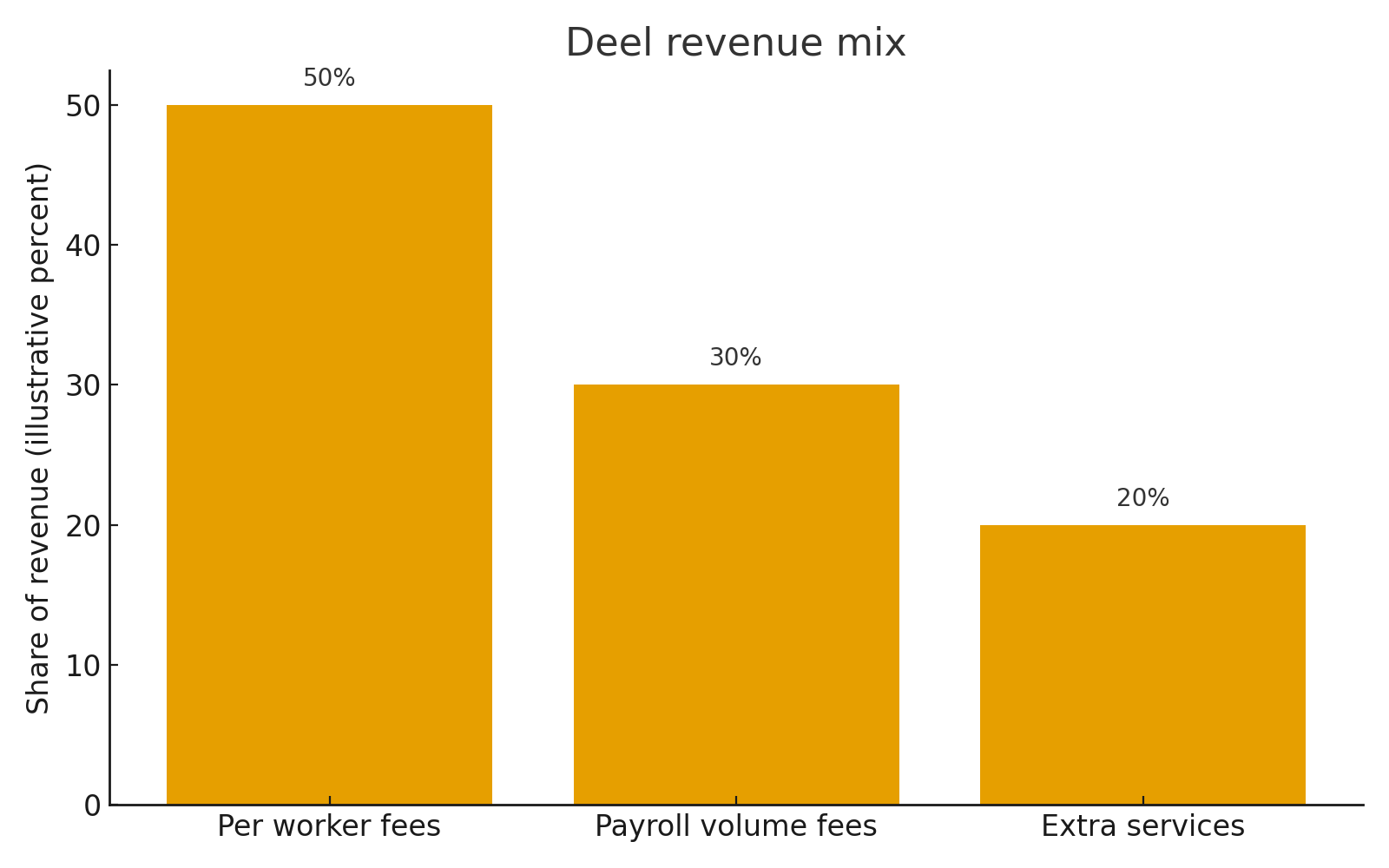 Deel revenue mix
The exact numbers are not public, but the idea is clear. The more workers a company hires through Deel and the higher their pay, the more revenue Deel earns. Extra services add higher margin income on top of basic fees.
Why this works globally
As remote work grows, companies want to hire talent from many countries without building offices in each one. Deel invests in understanding local rules and building the systems needed to stay compliant. Once that work is done for a country, Deel can reuse it across many clients.
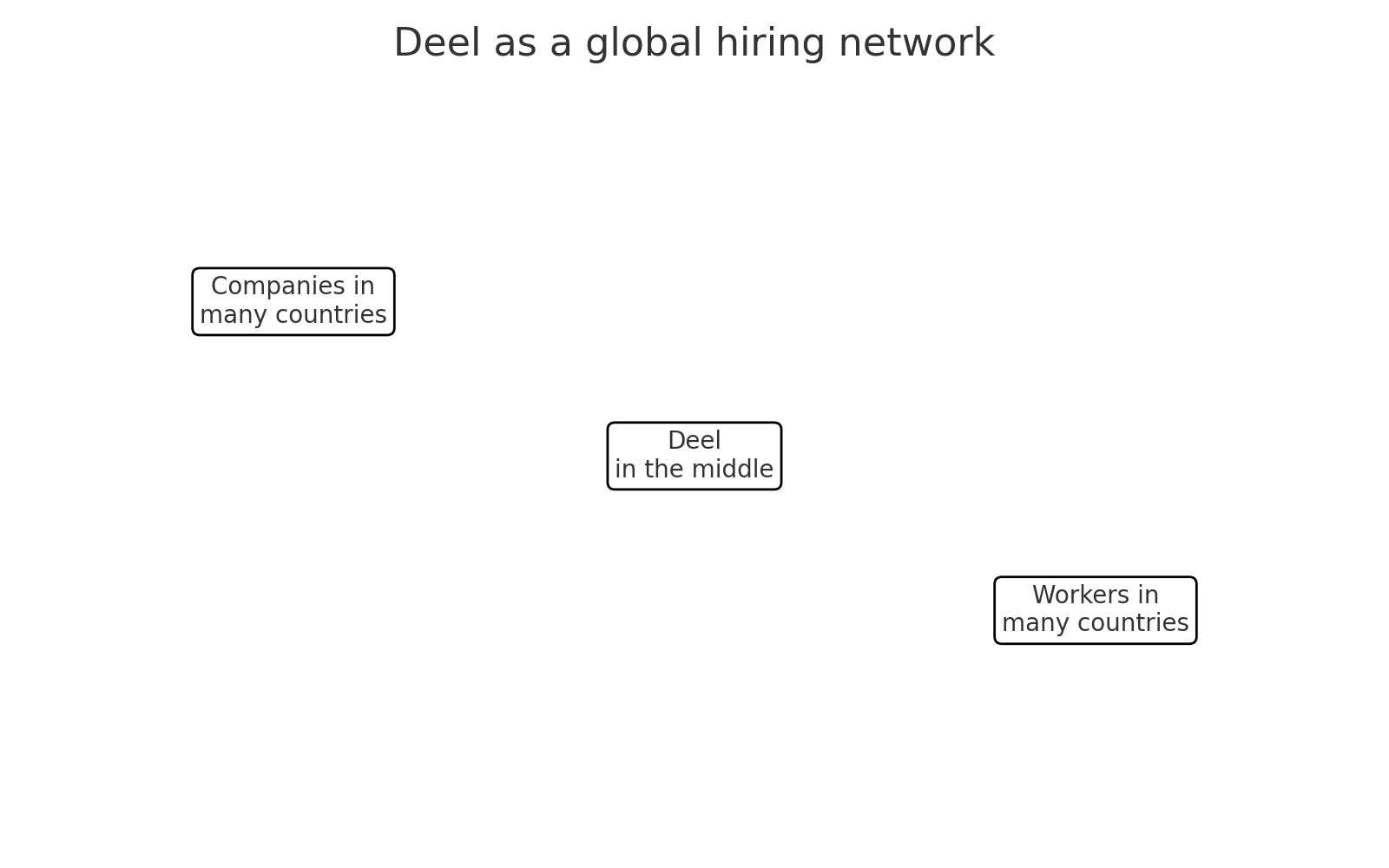 Deel global network
This creates a network effect. More companies hiring through Deel in a country make the investment in that country more valuable. More workers getting paid through Deel make the platform more attractive to companies that want to hire there. Deel sits in the middle and takes a cut of the flow.
Risks and challenges
Deel has to keep up with changing laws in many places. Mistakes in compliance, tax, or labor rules can be costly. It also faces competition from other global payroll and employer of record providers. Large companies may choose to build their own local entities if they scale enough in a country.
Even with these risks, Deel shows a clear economic idea. It turns the complexity of global hiring into a service and charges a fee to remove that friction for its customers.
Sources
- Deel’s public website, product pages, and help center materials
- Industry articles on global payroll, employer of record models, and remote hiring
- Interviews and funding news that describe Deel’s growth and expansion strategy
- Market maps of remote work and global hiring platforms