Notion economics: flexible workspaces and slow expansion
Notion is a workspace app where people can take notes, track tasks, build simple databases, and share pages with others. It can be used by one person for personal planning or by full companies for documentation and projects.
What Notion does in simple terms
The basic building block in Notion is a page. A page can be plain text, a task list, a board, a table, or a more complex setup. People group pages into spaces. Those spaces can be for one person, a team, or an entire company.
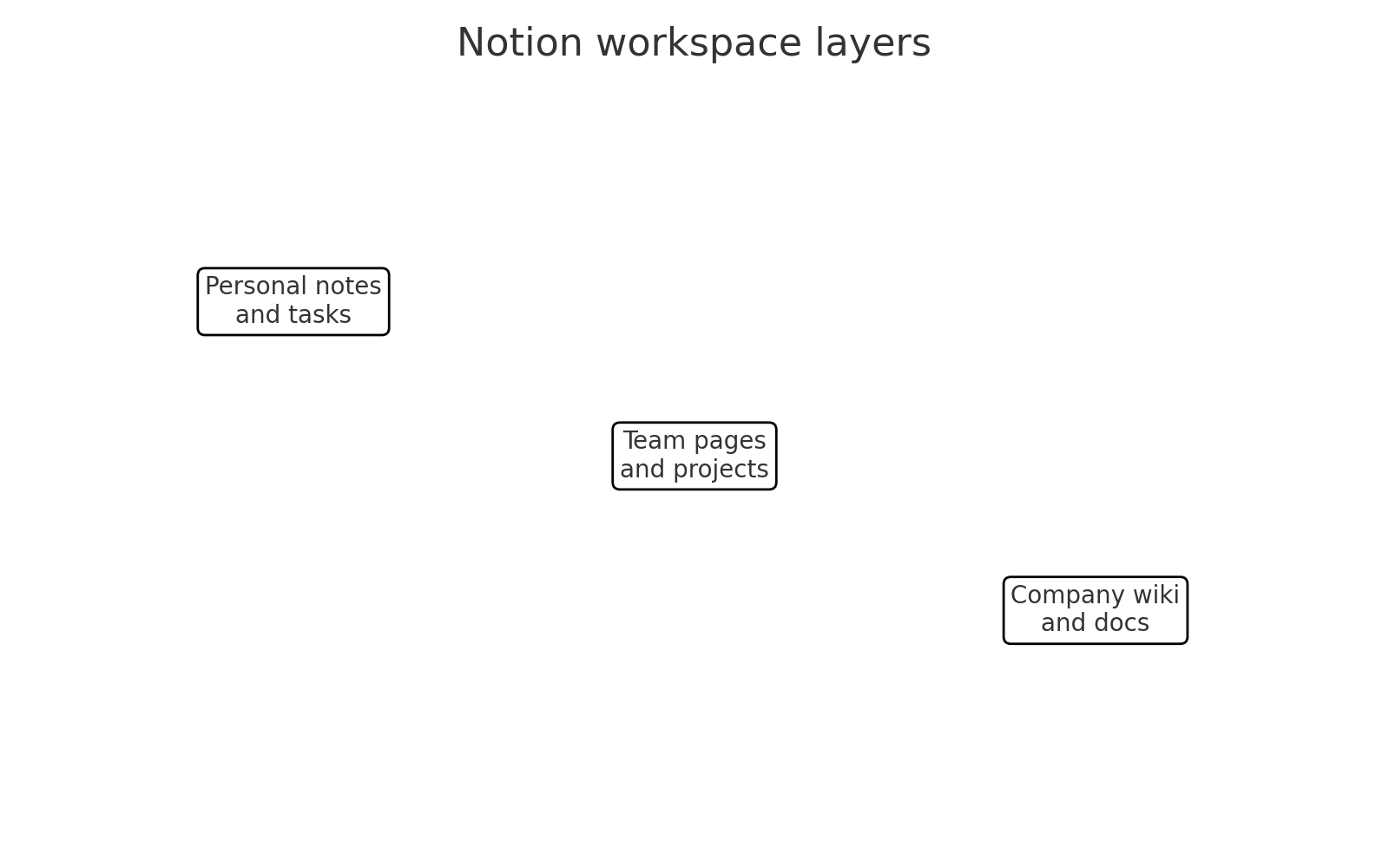 Notion workspace layers
A simple way to think about it is in three layers. At the base are personal notes and tasks. On top of that are team pages and project boards. Above that sits the company wiki with policies, processes, and shared documents.
How Notion makes money
Notion follows a freemium model. The free plan lets people use most of the core features on their own. Once teams start using it more seriously, they move onto paid plans. These plans are usually priced per active user in a workspace.
Revenue mainly comes from three groups:
- people who pay for a personal plan
- small teams who pay for shared workspaces
- larger companies who pay for more seats and admin controls
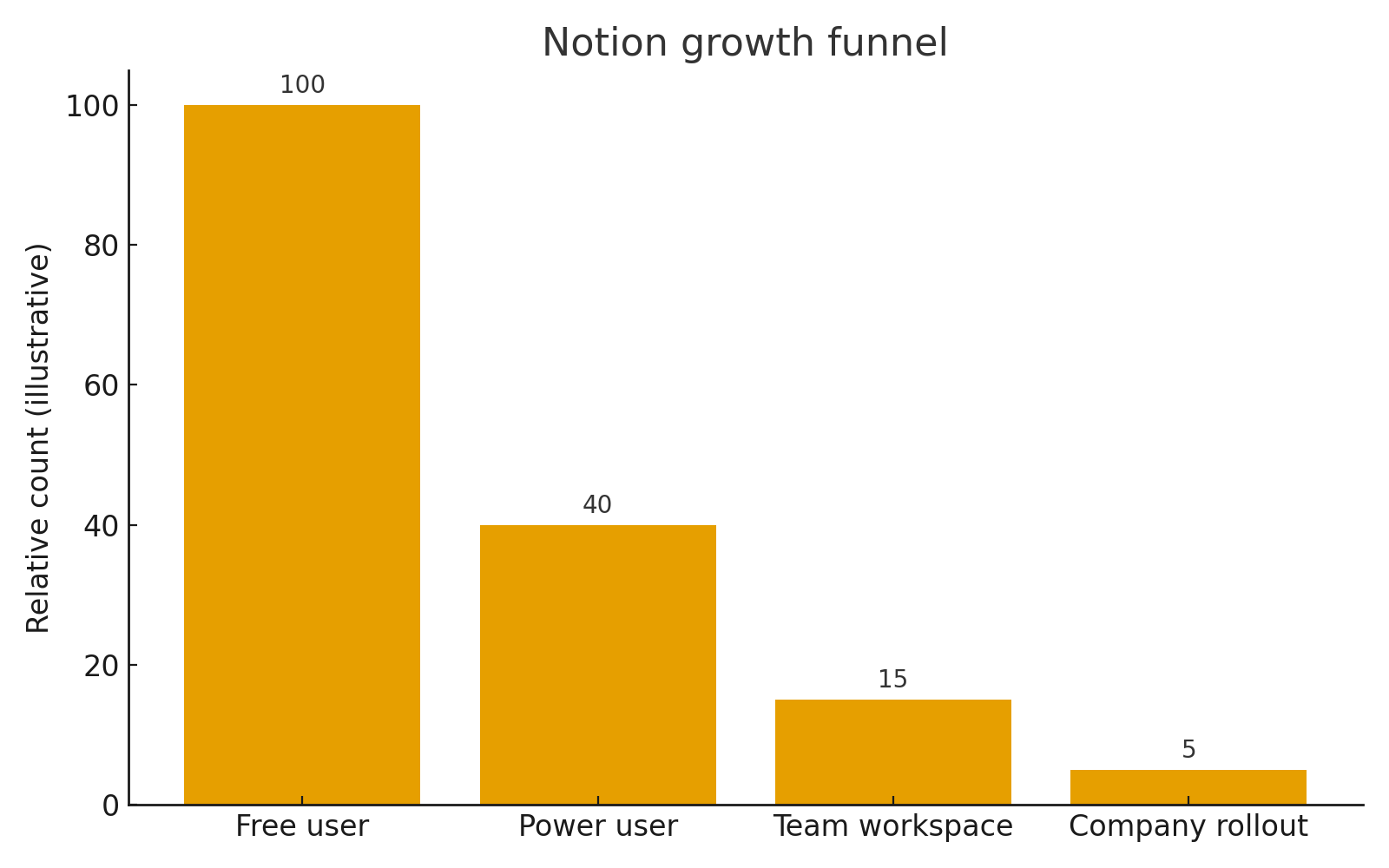 Notion growth funnel
The growth pattern is simple. A free user tries Notion, builds a system they like, and then pulls in teammates. Over time, some of those teams turn into full workspaces that cover a big part of a company. The number of paid seats grows faster than the number of new companies if adoption spreads inside each one.
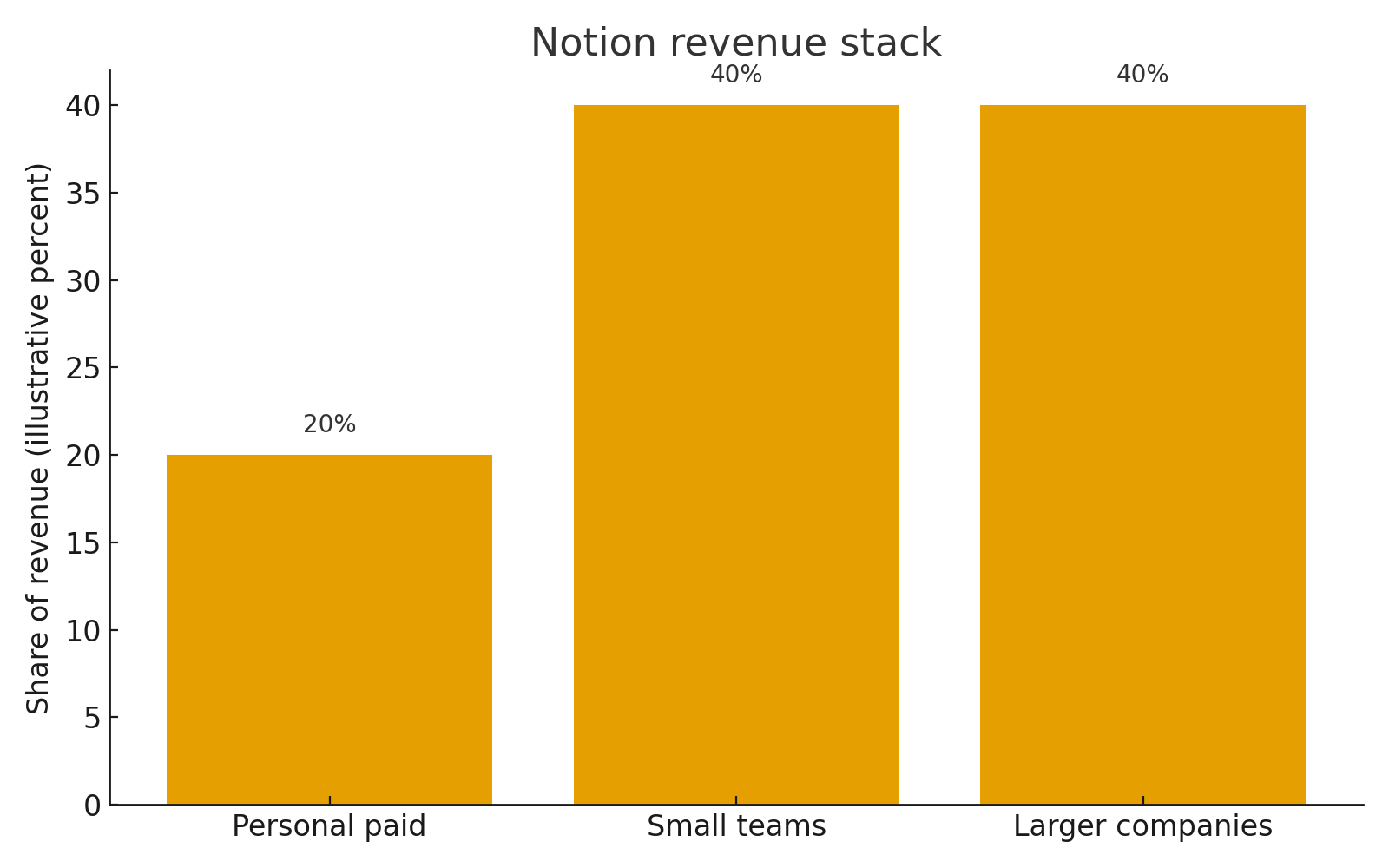 Notion revenue stack
This chart shows the idea. Personal plans matter, but small teams and larger companies drive most of the revenue because each extra seat adds recurring income.
Why this business model works
Notion benefits from product led growth. There is no need for a heavy sales push to get started. People discover it through friends, templates, social content, or school and work. Once they put real work into their pages, the cost of switching to another tool goes up. It is not just about price. It is about the time spent building a system that fits how they think.
Costs are mostly in product, engineering, and support. The cost to serve one more user is relatively low, especially when that user sits inside a large workspace that is already on the platform. This makes the economics better as more teams adopt it.
Risks and pressure points
Notion still faces strong competition. Big companies offer their own document, task, and wiki tools. Focused apps can also beat Notion at single use cases, like project management or spreadsheets. New users can feel overwhelmed by the flexibility and may not reach their own setup quickly.
Even with those risks, Notion shows how a flexible workspace app can grow. A free entry point brings users in. Some of them turn into power users who pull in teams. Over time, those teams can become sticky paid workspaces that support a real business.
Sources
- Notion company blog, help center, and public product documentation
- Industry articles and write ups on Notion’s product led and freemium model
- Public interviews and talks from Notion’s founders and early team members
- Market overviews of modern workspace and collaboration tools