Replit economics: coding in the browser and paid usage on top
Replit is a browser based coding platform. People can write code, run it, and share projects without needing to install a full setup on their own computer. This lowers the barrier to entry for new programmers and makes it easy to collaborate.
What Replit offers
In Replit, a user can create a project in many languages, write code in the browser, and run it on Replit’s servers. Projects can be shared with others, and multiple people can work on the same code in real time. There are templates, example projects, and a community around shared work.
The product is useful for students, hobby coders, and even small teams who want to prototype or host small apps without thinking too much about deployment.
How Replit makes money
Most users are on the free tier. They can create projects with some limits on resources. Replit makes money when users or teams decide they need more. Paid plans offer more storage, faster compute, always on projects, and other upgrades. There are also plans aimed at classrooms and education, plus usage based fees for heavier workloads.
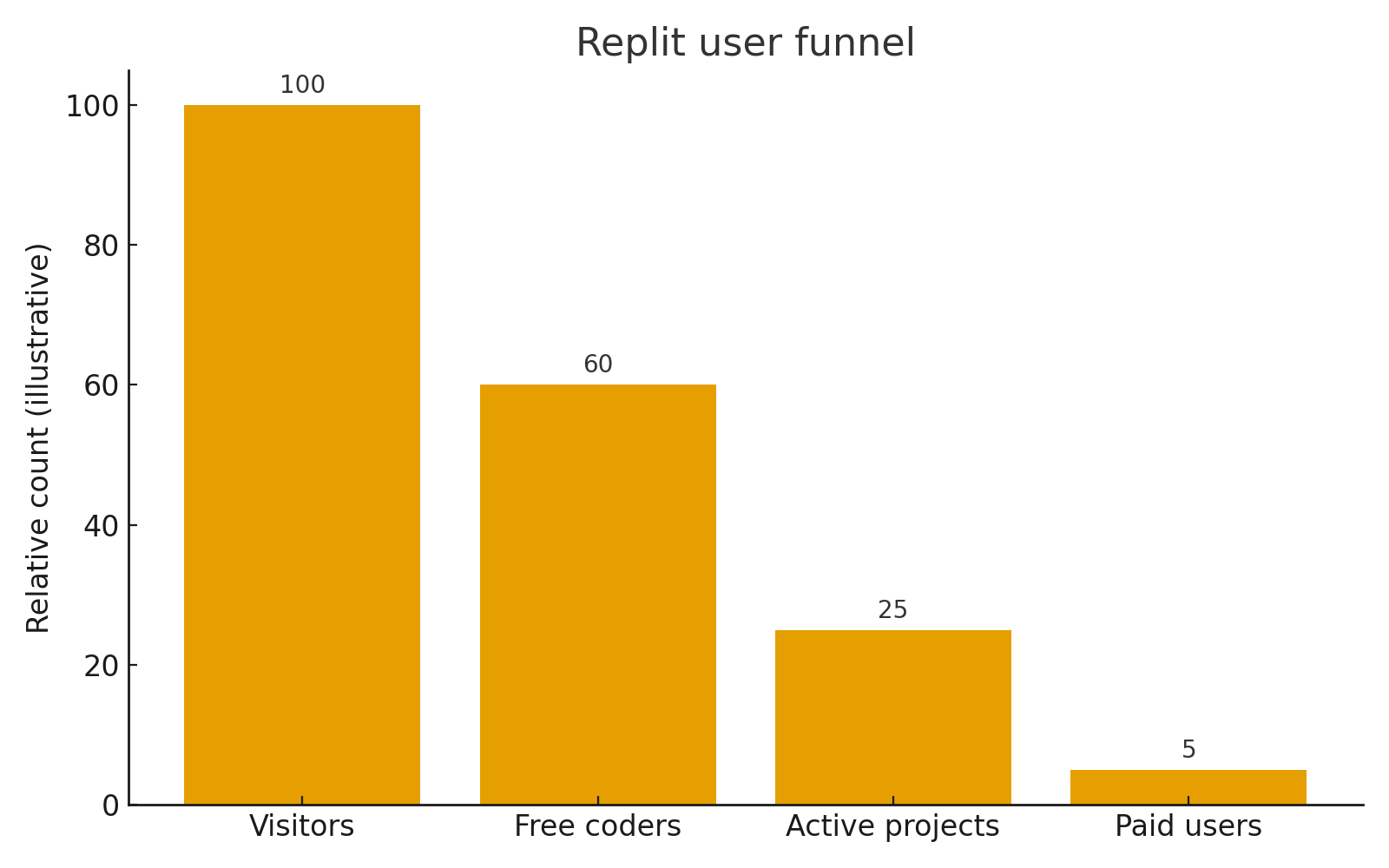 Replit user funnel
The funnel looks something like this. Many people visit the site. A fraction of them start coding as free users. Some of those users build active projects and want better performance or reliability. A smaller group converts into paying users or teams.
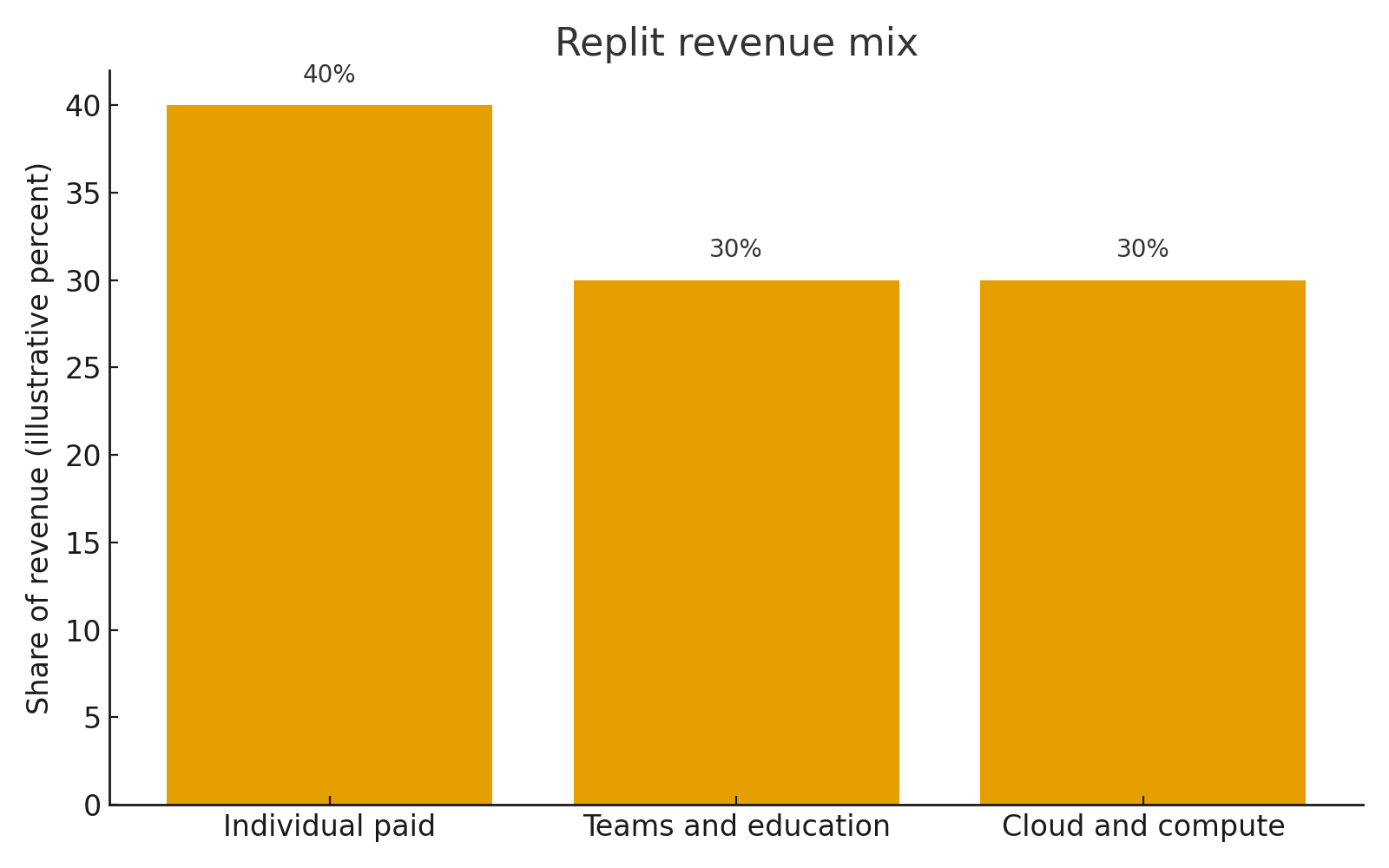 Replit revenue mix
Revenue is likely split between individual paid users, team and education plans, and more consumption based usage for projects that need more compute. The exact split does not matter as much as the idea that the free tier feeds traffic into these paid paths.
Why the platform has leverage
Replit benefits from network effects around content. The more users build and share projects, the more useful the platform becomes for new users. It is easier to learn when there are many examples to fork and remix. That makes the platform a better place to start coding, which pulls in more users.
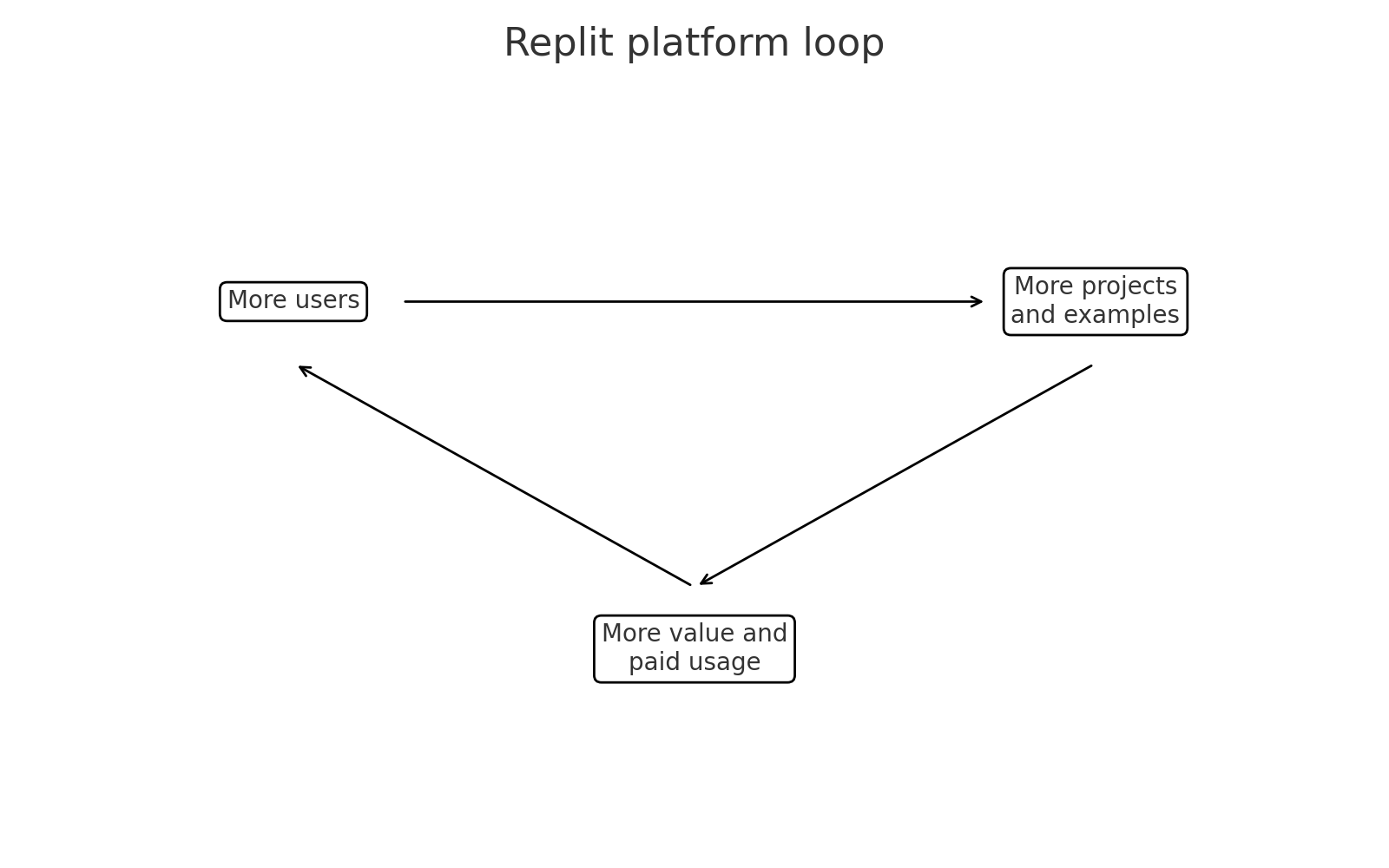 Replit platform loop
More users create more projects and examples. More projects make the platform more valuable, both for learning and for quick app building. As the value goes up, more people are willing to pay for extra features or more usage, which funds more product improvements.
Risks and challenges
Replit competes with local coding setups, other cloud based coding tools, and full cloud platforms that offer more control. It has to keep free users happy while nudging some of them toward paid plans. It also has to manage the cost of hosting many free projects without letting infrastructure costs run away.
Even so, Replit is a good example of a modern developer tool model. Free access brings in users. Some of them grow into heavier usage that justifies paying. The platform sits between a pure hobby tool and a full cloud provider.
Sources
- Replit’s own docs, blog posts, and public product pages
- Interviews and talks from Replit’s founders on their mission and business model
- Articles and market breakdowns on cloud development and coding platforms
- Community posts and case studies on how students and teams use Replit